
717 lines
24 KiB
Markdown
717 lines
24 KiB
Markdown

|
|
|
|
# 30-seconds-of-python-code
|
|
[](https://github.com/kriadmin/30-seconds-of-python-code/blob/master/LICENSE) [](https://gitter.im/30-seconds-of-python-code/Lobby) [](http://makeapullrequest.com) [](https://travis-ci.org/kriadmin/30-seconds-of-python-code) [](https://insight.io/github.com/kriadmin/30-seconds-of-python-code/tree/master/?source=0) [](https://github.com/Flet/semistandard)
|
|
[](https://app.fossa.io/projects/git%2Bgithub.com%2Fkriadmin%2F30-seconds-of-python-code?ref=badge_shield)
|
|
|
|
>Python implementation of 30-seconds-of-code.
|
|
|
|
**Note**:- This is in no way affiliated with the original [30-seconds-of-code](https://github.com/Chalarangelo/30-seconds-of-code/).
|
|
|
|
### Table of contents
|
|
### :books: List
|
|
|
|
<details><summary>View contents</summary> <ul><li><a href = "#chunk"><code>chunk</code></a></li>
|
|
<li><a href = "#compact"><code>compact</code></a></li>
|
|
<li><a href = "#count_by"><code>count_by</code></a></li>
|
|
<li><a href = "#count_occurences"><code>count_occurences</code></a></li>
|
|
<li><a href = "#deep_flatten"><code>deep_flatten</code></a></li>
|
|
<li><a href = "#difference"><code>difference</code></a></li>
|
|
<li><a href = "#difference_by"><code>difference_by</code></a></li>
|
|
<li><a href = "#insertion_sort"><code>insertion_sort</code></a></li>
|
|
<li><a href = "#shuffle"><code>shuffle</code></a></li>
|
|
<li><a href = "#spread"><code>spread</code></a></li>
|
|
<li><a href = "#zip"><code>zip</code></a></li>
|
|
</ul></details>
|
|
|
|
### :heavy_division_sign: Math
|
|
|
|
<details><summary>View contents</summary> <ul><li><a href = "#average"><code>average</code></a></li>
|
|
<li><a href = "#factorial"><code>factorial</code></a></li>
|
|
<li><a href = "#gcd"><code>gcd</code></a></li>
|
|
<li><a href = "#lcm"><code>lcm</code></a></li>
|
|
<li><a href = "#max_n"><code>max_n</code></a></li>
|
|
<li><a href = "#min_n"><code>min_n</code></a></li>
|
|
</ul></details>
|
|
|
|
### :scroll: String
|
|
|
|
<details><summary>View contents</summary> <ul><li><a href = "#byte_size"><code>byte_size</code></a></li>
|
|
<li><a href = "#capitalize"><code>capitalize</code></a></li>
|
|
<li><a href = "#capitalize_every_word"><code>capitalize_every_word</code></a></li>
|
|
<li><a href = "#count_vowels"><code>count_vowels</code></a></li>
|
|
<li><a href = "#decapitalize"><code>decapitalize</code></a></li>
|
|
<li><a href = "#is_lower_case"><code>is_lower_case</code></a></li>
|
|
<li><a href = "#is_upper_case"><code>is_upper_case</code></a></li>
|
|
<li><a href = "#palindrome"><code>palindrome</code></a></li>
|
|
</ul></details>
|
|
|
|
<hr></hr>
|
|
|
|
## :books: List
|
|
|
|
### chunk
|
|
<span style="color:grey">Author:-</span> [Rohit Tanwar](https://www.github.com/kriadmin)
|
|
<span style="color:grey">Contributors:-</span>[Rohit Tanwar](https://www.github.com/kriadmin)
|
|
|
|
Chunks an array into smaller lists of a specified size.
|
|
|
|
Uses `range` to create a list of desired size. Then use `map` on this list and fill it with splices of `arr`.
|
|
```py
|
|
from math import ceil
|
|
|
|
|
|
def chunk(arr, size):
|
|
return list(
|
|
map(lambda x: arr[x * size:x * size + size],
|
|
list(range(0, ceil(len(arr) / size)))))
|
|
```
|
|
<details><summary>View Examples</summary>
|
|
|
|
```py
|
|
chunk([1,2,3,4,5],2) # [[1,2],[3,4],5]
|
|
```
|
|
</details>
|
|
|
|
<br><a href = "#table-of-contents">:arrow_up: Back to top</a>
|
|
|
|
### compact
|
|
<span style="color:grey">Author:-</span> [Rohit Tanwar](https://www.github.com/kriadmin)
|
|
<span style="color:grey">Contributors:-</span>[Rohit Tanwar](https://www.github.com/kriadmin)
|
|
|
|
Removes falsey values from a list.
|
|
|
|
Use `filter()` to filter out falsey values (False, None, 0, and "").
|
|
```py
|
|
def compact(arr):
|
|
return list(filter(lambda x: bool(x), arr))
|
|
```
|
|
<details><summary>View Examples</summary>
|
|
|
|
```py
|
|
compact([0, 1, False, 2, '', 3, 'a', 's', 34]) # [ 1, 2, 3, 'a', 's', 34 ]
|
|
```
|
|
</details>
|
|
|
|
<br><a href = "#table-of-contents">:arrow_up: Back to top</a>
|
|
|
|
### count_by
|
|
<span style="color:grey">Author:-</span> [Rohit Tanwar](https://www.github.com/kriadmin)
|
|
<span style="color:grey">Contributors:-</span>[Rohit Tanwar](https://www.github.com/kriadmin)
|
|
|
|
:information_source: Already implemented via `collections.Counter`
|
|
|
|
Groups the elements of a list based on the given function and returns the count of elements in each group.
|
|
|
|
Use `map()` to map the values of the list using the given function. Iterate over the map and increase the the elements count each time it occurs.
|
|
```py
|
|
def count_by(arr, fn=lambda x: x):
|
|
key = {}
|
|
for el in map(fn, arr):
|
|
key[el] = 0 if not el in key else key[el]
|
|
key[el] += 1
|
|
return key
|
|
```
|
|
<details><summary>View Examples</summary>
|
|
|
|
```py
|
|
from math import floor
|
|
count_by([6.1, 4.2, 6.3], floor) # {4: 1, 6: 2}
|
|
count_by(['one', 'two', 'three'], len) # {3: 2, 5: 1}
|
|
```
|
|
</details>
|
|
|
|
<br><a href = "#table-of-contents">:arrow_up: Back to top</a>
|
|
|
|
### count_occurences
|
|
<span style="color:grey">Author:-</span> [Rohit Tanwar](https://www.github.com/kriadmin)
|
|
<span style="color:grey">Contributors:-</span>[Rohit Tanwar](https://www.github.com/kriadmin)
|
|
|
|
:information_source: Already implemented via `list.count()`.
|
|
|
|
Counts the occurrences of a value in an list.
|
|
|
|
Uses the `reduce` functin from built-in module `functools` to increment a counter each time you encounter the specific value inside the list.
|
|
```py
|
|
from functools import reduce
|
|
|
|
|
|
def count_occurences(arr, val):
|
|
return reduce(
|
|
(lambda x, y: x + 1 if y == val and type(y) == type(val) else x + 0),
|
|
arr)
|
|
```
|
|
<details><summary>View Examples</summary>
|
|
|
|
```py
|
|
count_occurrences([1, 1, 2, 1, 2, 3], 1) # 3
|
|
```
|
|
</details>
|
|
|
|
<br><a href = "#table-of-contents">:arrow_up: Back to top</a>
|
|
|
|
### deep_flatten
|
|
<span style="color:grey">Author:-</span> [Rohit Tanwar](https://www.github.com/kriadmin)
|
|
<span style="color:grey">Contributors:-</span>[Rohit Tanwar](https://www.github.com/kriadmin), [Meet Zaveri](https://www.github.com/meetzaveri)
|
|
|
|
Deep flattens a list.
|
|
|
|
Use recursion. Use `list.extend()` with an empty array (`result`) and the spread function to flatten a list. Recursively flatten each element that is a list.
|
|
```py
|
|
def spread(arg):
|
|
ret = []
|
|
for i in arg:
|
|
if isinstance(i, list):
|
|
ret.extend(i)
|
|
else:
|
|
ret.append(i)
|
|
return ret
|
|
|
|
|
|
def deep_flatten(arr):
|
|
result = []
|
|
result.extend(
|
|
spread(list(map(lambda x: deep_flatten(x) if type(x) == list else x, arr))))
|
|
return result
|
|
```
|
|
<details><summary>View Examples</summary>
|
|
|
|
```py
|
|
deep_flatten([1, [2], [[3], 4], 5]) # [1,2,3,4,5]
|
|
```
|
|
</details>
|
|
|
|
<br><a href = "#table-of-contents">:arrow_up: Back to top</a>
|
|
|
|
### difference
|
|
<span style="color:grey">Author:-</span> [Rohit Tanwar](https://www.github.com/kriadmin)
|
|
<span style="color:grey">Contributors:-</span>[Rohit Tanwar](https://www.github.com/kriadmin)
|
|
|
|
Returns the difference between two arrays.
|
|
|
|
Create a `set` from `b`, then use list comprehension to only keep values not contained in `b`
|
|
```py
|
|
def difference(a, b):
|
|
b = set(b)
|
|
return [item for item in a if item not in b]
|
|
```
|
|
<details><summary>View Examples</summary>
|
|
|
|
```py
|
|
difference([1, 2, 3], [1, 2, 4]) # [3]
|
|
```
|
|
</details>
|
|
|
|
<br><a href = "#table-of-contents">:arrow_up: Back to top</a>
|
|
|
|
### difference_by
|
|
<span style="color:grey">Author:-</span> [Rohit Tanwar](https://www.github.com/kriadmin)
|
|
<span style="color:grey">Contributors:-</span>[Rohit Tanwar](https://www.github.com/kriadmin)
|
|
|
|
Returns the difference between two list, after applying the provided function to each list element of both.
|
|
|
|
Create a `set` by applying `fn` to each element in `b`, then use list comprehension in combination with fn on a to only keep values not contained in the previously created `set`.
|
|
```py
|
|
def difference_by(a, b, fn):
|
|
b = set(map(fn, b))
|
|
return [item for item in a if fn(item) not in b]
|
|
```
|
|
<details><summary>View Examples</summary>
|
|
|
|
```py
|
|
from math import floor
|
|
difference_by([2.1, 1.2], [2.3, 3.4],floor) # [1.2]
|
|
difference_by([{ 'x': 2 }, { 'x': 1 }], [{ 'x': 1 }], lambda v : v['x']) # [ { x: 2 } ]
|
|
```
|
|
</details>
|
|
|
|
<br><a href = "#table-of-contents">:arrow_up: Back to top</a>
|
|
|
|
### insertion_sort
|
|
<span style="color:grey">Author:-</span> [Meet Zaveri](https://www.github.com/meetzaveri)
|
|
<span style="color:grey">Contributors:-</span>[Meet Zaveri](https://www.github.com/meetzaveri), [Rohit Tanwar](https://www.github.com/kriadmin)
|
|
|
|
On a very basic level, an insertion sort algorithm contains the logic of shifting around and inserting elements in order to sort an unordered list of any size. The way that it goes about inserting elements, however, is what makes insertion sort so very interesting!
|
|
```py
|
|
def insertion_sort(arr):
|
|
|
|
for i in range(1, len(arr)):
|
|
key = arr[i]
|
|
j = i - 1
|
|
while j >= 0 and key < arr[j]:
|
|
arr[j + 1] = arr[j]
|
|
j -= 1
|
|
arr[j + 1] = key
|
|
```
|
|
<details><summary>View Examples</summary>
|
|
|
|
```py
|
|
arr = [7,4,9,2,6,3]
|
|
insertionsort(arr)
|
|
print('Sorted %s' %arr) # sorted [2, 3, 4, 6, 7, 9]
|
|
```
|
|
</details>
|
|
|
|
<br><a href = "#table-of-contents">:arrow_up: Back to top</a>
|
|
|
|
### shuffle
|
|
<span style="color:grey">Author:-</span> [Rohit Tanwar](https://www.github.com/kriadmin)
|
|
<span style="color:grey">Contributors:-</span>[Rohit Tanwar](https://www.github.com/kriadmin)
|
|
|
|
:information_source: The same algorithm is already implemented via `random.shuffle`.
|
|
|
|
Randomizes the order of the values of an list, returning a new list.
|
|
|
|
Uses the [Fisher-Yates algorithm](https://en.wikipedia.org/wiki/Fisher%E2%80%93Yates_shuffle) to reorder the elements of the list.
|
|
```py
|
|
from copy import deepcopy
|
|
from random import randint
|
|
|
|
|
|
def shuffle(arr):
|
|
temp_arr = deepcopy(arr)
|
|
m = len(temp_arr)
|
|
while (m):
|
|
m -= 1
|
|
i = randint(0, m)
|
|
temp_arr[m], temp_arr[i] = temp_arr[i], temp_arr[m]
|
|
return temp_arr
|
|
```
|
|
<details><summary>View Examples</summary>
|
|
|
|
```py
|
|
foo = [1,2,3]
|
|
shuffle(foo) # [2,3,1] , foo = [1,2,3]
|
|
```
|
|
</details>
|
|
|
|
<br><a href = "#table-of-contents">:arrow_up: Back to top</a>
|
|
|
|
### spread
|
|
<span style="color:grey">Author:-</span> [Rohit Tanwar](https://www.github.com/kriadmin)
|
|
<span style="color:grey">Contributors:-</span>[Rohit Tanwar](https://www.github.com/kriadmin)
|
|
|
|
Implements javascript's `[].concat(...arr)`. Flattens the list(non-deep) and returns an list.
|
|
```py
|
|
def spread(arg):
|
|
ret = []
|
|
for i in arg:
|
|
if isinstance(i, list):
|
|
ret.extend(i)
|
|
else:
|
|
ret.append(i)
|
|
return ret
|
|
```
|
|
<details><summary>View Examples</summary>
|
|
|
|
```py
|
|
spread([1,2,3,[4,5,6],[7],8,9]) # [1,2,3,4,5,6,7,8,9]
|
|
```
|
|
</details>
|
|
|
|
<br><a href = "#table-of-contents">:arrow_up: Back to top</a>
|
|
|
|
### zip
|
|
<span style="color:grey">Author:-</span> [Rohit Tanwar](https://www.github.com/kriadmin)
|
|
<span style="color:grey">Contributors:-</span>[Rohit Tanwar](https://www.github.com/kriadmin)
|
|
|
|
:information_source: Already implemented via `itertools.zip_longest()`
|
|
|
|
Creates a list of elements, grouped based on the position in the original lists.
|
|
|
|
Use `max` combined with `list comprehension` to get the length of the longest list in the arguments. Loops for `max_length` times grouping elements. If lengths of `lists` vary `fill_value` is used. By default `fill_value` is `None`.
|
|
```py
|
|
def zip(*args, fillvalue=None):
|
|
max_length = max([len(arr) for arr in args])
|
|
result = []
|
|
for i in range(max_length):
|
|
result.append([
|
|
args[k][i] if i < len(args[k]) else None for k in range(len(args))
|
|
])
|
|
return result
|
|
```
|
|
<details><summary>View Examples</summary>
|
|
|
|
```py
|
|
zip(['a', 'b'], [1, 2], [True, False]) # [['a', 1, True], ['b', 2, False]]
|
|
zip(['a'], [1, 2], [True, False]) # [['a', 1, True], [None, 2, False]]
|
|
zip(['a'], [1, 2], [True, False], fill_value = '_') # [['a', 1, True], ['_', 2, False]]
|
|
```
|
|
</details>
|
|
|
|
<br><a href = "#table-of-contents">:arrow_up: Back to top</a>
|
|
|
|
## :heavy_division_sign: Math
|
|
|
|
### average
|
|
<span style="color:grey">Author:-</span> [Rohit Tanwar](https://www.github.com/kriadmin)
|
|
<span style="color:grey">Contributors:-</span>[Rohit Tanwar](https://www.github.com/kriadmin)
|
|
|
|
:information_source: Already implemented via `statistics.mean`. `statistics.mean` takes an array as an argument whereas this function takes variadic arguments.
|
|
|
|
Returns the average of two or more numbers.
|
|
|
|
Takes the sum of all the `args` and divides it by `len(args)`. The secind argument `0.0` in sum is to handle floating point division in `python2`.
|
|
```py
|
|
def average(*args):
|
|
return sum(args, 0.0) / len(args)
|
|
```
|
|
<details><summary>View Examples</summary>
|
|
|
|
```py
|
|
average(*[1, 2, 3]) # 2.0
|
|
average(1, 2, 3) # 2.0
|
|
```
|
|
</details>
|
|
|
|
<br><a href = "#table-of-contents">:arrow_up: Back to top</a>
|
|
|
|
### factorial
|
|
<span style="color:grey">Author:-</span> [Rohit Tanwar](https://www.github.com/kriadmin)
|
|
<span style="color:grey">Contributors:-</span>[Rohit Tanwar](https://www.github.com/kriadmin)
|
|
|
|
Calculates the factorial of a number.
|
|
|
|
Use recursion. If `num` is less than or equal to `1`, return `1`. Otherwise, return the product of `num` and the factorial of `num - 1`. Throws an exception if `num` is a negative or a floating point number.
|
|
```py
|
|
def factorial(num):
|
|
if not ((num >= 0) & (num % 1 == 0)):
|
|
raise Exception(
|
|
f"Number( {num} ) can't be floating point or negative ")
|
|
return 1 if num == 0 else num * factorial(num - 1)
|
|
```
|
|
<details><summary>View Examples</summary>
|
|
|
|
```py
|
|
factorial(6) # 720
|
|
```
|
|
</details>
|
|
|
|
<br><a href = "#table-of-contents">:arrow_up: Back to top</a>
|
|
|
|
### gcd
|
|
<span style="color:grey">Author:-</span> [Rohit Tanwar](https://www.github.com/kriadmin)
|
|
<span style="color:grey">Contributors:-</span>[Rohit Tanwar](https://www.github.com/kriadmin), [cclauss][@cclauss]
|
|
|
|
:information_source: `math.gcd` works with only two numbers
|
|
|
|
Calculates the greatest common divisor between two or more numbers/lists.
|
|
|
|
The `helperGcdfunction` uses recursion. Base case is when `y` equals `0`. In this case, return `x`. Otherwise, return the GCD of `y` and the remainder of the division `x/y`.
|
|
|
|
Uses the reduce function from the inbuilt module `functools`. Also defines a method `spread` for javascript like spreading of lists.
|
|
```py
|
|
from functools import reduce
|
|
|
|
|
|
def spread(arg):
|
|
ret = []
|
|
for i in arg:
|
|
if isinstance(i, list):
|
|
ret.extend(i)
|
|
else:
|
|
ret.append(i)
|
|
return ret
|
|
|
|
|
|
def gcd(*args):
|
|
numbers = []
|
|
numbers.extend(spread(list(args)))
|
|
|
|
def _gcd(x, y):
|
|
return x if not y else gcd(y, x % y)
|
|
|
|
return reduce((lambda x, y: _gcd(x, y)), numbers)
|
|
```
|
|
<details><summary>View Examples</summary>
|
|
|
|
```py
|
|
gcd(8,36) # 4
|
|
```
|
|
</details>
|
|
|
|
<br><a href = "#table-of-contents">:arrow_up: Back to top</a>
|
|
|
|
### lcm
|
|
<span style="color:grey">Author:-</span> [Rohit Tanwar](https://www.github.com/kriadmin)
|
|
<span style="color:grey">Contributors:-</span>[Rohit Tanwar](https://www.github.com/kriadmin)
|
|
|
|
Returns the least common multiple of two or more numbers.
|
|
|
|
Use the `greatest common divisor (GCD)` formula and the fact that `lcm(x,y) = x * y / gcd(x,y)` to determine the least common multiple. The GCD formula uses recursion.
|
|
|
|
Uses `reduce` function from the inbuilt module `functools`. Also defines a method `spread` for javascript like spreading of lists.
|
|
```py
|
|
from functools import reduce
|
|
|
|
|
|
def spread(arg):
|
|
ret = []
|
|
for i in arg:
|
|
if isinstance(i, list):
|
|
ret.extend(i)
|
|
else:
|
|
ret.append(i)
|
|
return ret
|
|
|
|
|
|
def lcm(*args):
|
|
numbers = []
|
|
numbers.extend(spread(list(args)))
|
|
|
|
def _gcd(x, y):
|
|
return x if not y else _gcd(y, x % y)
|
|
|
|
def _lcm(x, y):
|
|
return x * y / _gcd(x, y)
|
|
|
|
return reduce((lambda x, y: _lcm(x, y)), numbers)
|
|
```
|
|
<details><summary>View Examples</summary>
|
|
|
|
```py
|
|
lcm(12, 7) # 84
|
|
lcm([1, 3, 4], 5) # 60
|
|
```
|
|
</details>
|
|
|
|
<br><a href = "#table-of-contents">:arrow_up: Back to top</a>
|
|
|
|
### max_n
|
|
<span style="color:grey">Author:-</span> [Rohit Tanwar](https://www.github.com/kriadmin)
|
|
<span style="color:grey">Contributors:-</span>[Rohit Tanwar](https://www.github.com/kriadmin)
|
|
|
|
Returns the `n` maximum elements from the provided list. If `n` is greater than or equal to the provided list's length, then return the original list(sorted in descending order).
|
|
|
|
Use `list.sort()` combined with the `deepcopy` function from the inbuilt `copy` module to create a shallow clone of the list and sort it in ascending order and then use `list.reverse()` reverse it to make it descending order. Use `[:n]` to get the specified number of elements. Omit the second argument, `n`, to get a one-element array
|
|
```py
|
|
from copy import deepcopy
|
|
|
|
|
|
def max_n(arr, n=1):
|
|
numbers = deepcopy(arr)
|
|
numbers.sort()
|
|
numbers.reverse()
|
|
return numbers[:n]
|
|
```
|
|
<details><summary>View Examples</summary>
|
|
|
|
```py
|
|
max_n([1, 2, 3]) # [3]
|
|
max_n([1, 2, 3], 2) # [3,2]
|
|
```
|
|
</details>
|
|
|
|
<br><a href = "#table-of-contents">:arrow_up: Back to top</a>
|
|
|
|
### min_n
|
|
<span style="color:grey">Author:-</span> [Rohit Tanwar](https://www.github.com/kriadmin)
|
|
<span style="color:grey">Contributors:-</span>[Rohit Tanwar](https://www.github.com/kriadmin)
|
|
|
|
Returns the `n` minimum elements from the provided list. If `n` is greater than or equal to the provided list's length, then return the original list(sorted in ascending order).
|
|
|
|
Use `list.sort()` combined with the `deepcopy` function from the inbuilt `copy` module to create a shallow clone of the list and sort it in ascending order. Use `[:n]` to get the specified number of elements. Omit the second argument, `n`, to get a one-element array
|
|
```py
|
|
from copy import deepcopy
|
|
|
|
|
|
def min_n(arr, n=1):
|
|
numbers = deepcopy(arr)
|
|
numbers.sort()
|
|
return numbers[:n]
|
|
```
|
|
<details><summary>View Examples</summary>
|
|
|
|
```py
|
|
min_n([1, 2, 3]) # [1]
|
|
min_n([1, 2, 3], 2) # [1,2]
|
|
```
|
|
</details>
|
|
|
|
<br><a href = "#table-of-contents">:arrow_up: Back to top</a>
|
|
|
|
## :scroll: String
|
|
|
|
### byte_size
|
|
<span style="color:grey">Author:-</span> [Rohit Tanwar](https://www.github.com/kriadmin)
|
|
<span style="color:grey">Contributors:-</span>[Rohit Tanwar](https://www.github.com/kriadmin)
|
|
|
|
Returns the length of a string in bytes.
|
|
|
|
`utf-8` encodes a given string and find its length.
|
|
```py
|
|
def byte_size(string):
|
|
return(len(string.encode('utf-8')))
|
|
```
|
|
<details><summary>View Examples</summary>
|
|
|
|
```py
|
|
byte_size('😀') # 4
|
|
byte_size('Hello World') # 11
|
|
```
|
|
</details>
|
|
|
|
<br><a href = "#table-of-contents">:arrow_up: Back to top</a>
|
|
|
|
### capitalize
|
|
<span style="color:grey">Author:-</span> [Rohit Tanwar](https://www.github.com/kriadmin)
|
|
<span style="color:grey">Contributors:-</span>[Rohit Tanwar](https://www.github.com/kriadmin)
|
|
|
|
Capitalizes the first letter of a string.
|
|
|
|
Capitalizes the fist letter of the sring and then adds it with rest of the string. Omit the `lower_rest` parameter to keep the rest of the string intact, or set it to `true` to convert to lowercase.
|
|
```py
|
|
def capitalize(string, lower_rest=False):
|
|
return string[:1].upper() + (string[1:].lower() if lower_rest else string[1:])
|
|
```
|
|
<details><summary>View Examples</summary>
|
|
|
|
```py
|
|
capitalize('fooBar') # 'FooBar'
|
|
capitalize('fooBar', True) # 'Foobar'
|
|
```
|
|
</details>
|
|
|
|
<br><a href = "#table-of-contents">:arrow_up: Back to top</a>
|
|
|
|
### capitalize_every_word
|
|
<span style="color:grey">Author:-</span> [Rohit Tanwar](https://www.github.com/kriadmin)
|
|
<span style="color:grey">Contributors:-</span>[Rohit Tanwar](https://www.github.com/kriadmin)
|
|
|
|
Capitalizes the first letter of every word in a string.
|
|
|
|
Uses `str.title` to capitalize first letter of evry word in the string.
|
|
```py
|
|
def capitalize_every_word(string):
|
|
return string.title()
|
|
```
|
|
<details><summary>View Examples</summary>
|
|
|
|
```py
|
|
capitalize_every_word('hello world!') # 'Hello World!'
|
|
```
|
|
</details>
|
|
|
|
<br><a href = "#table-of-contents">:arrow_up: Back to top</a>
|
|
|
|
### count_vowels
|
|
<span style="color:grey">Author:-</span> [Rohit Tanwar](https://www.github.com/kriadmin)
|
|
<span style="color:grey">Contributors:-</span>[Rohit Tanwar](https://www.github.com/kriadmin)
|
|
|
|
Retuns `number` of vowels in provided `string`.
|
|
|
|
Use a regular expression to count the number of vowels `(A, E, I, O, U)` in a string.
|
|
```py
|
|
import re
|
|
|
|
|
|
def count_vowels(str):
|
|
return len(len(re.findall(r'[aeiou]', str, re.IGNORECASE)))
|
|
```
|
|
<details><summary>View Examples</summary>
|
|
|
|
```py
|
|
count_vowels('foobar') # 3
|
|
count_vowels('gym') # 0
|
|
```
|
|
</details>
|
|
|
|
<br><a href = "#table-of-contents">:arrow_up: Back to top</a>
|
|
|
|
### decapitalize
|
|
<span style="color:grey">Author:-</span> [Rohit Tanwar](https://www.github.com/kriadmin)
|
|
<span style="color:grey">Contributors:-</span>[Rohit Tanwar](https://www.github.com/kriadmin)
|
|
|
|
Decapitalizes the first letter of a string.
|
|
|
|
Decapitalizes the fist letter of the sring and then adds it with rest of the string. Omit the `upper_rest` parameter to keep the rest of the string intact, or set it to `true` to convert to uppercase.
|
|
```py
|
|
def decapitalize(string, upper_rest=False):
|
|
return str[:1].lower() + (str[1:].upper() if upper_rest else str[1:])
|
|
```
|
|
<details><summary>View Examples</summary>
|
|
|
|
```py
|
|
decapitalize('FooBar') # 'fooBar'
|
|
decapitalize('FooBar', True) # 'fOOBAR'
|
|
```
|
|
</details>
|
|
|
|
<br><a href = "#table-of-contents">:arrow_up: Back to top</a>
|
|
|
|
### is_lower_case
|
|
<span style="color:grey">Author:-</span> [Rohit Tanwar](https://www.github.com/kriadmin)
|
|
<span style="color:grey">Contributors:-</span>[Rohit Tanwar](https://www.github.com/kriadmin)
|
|
|
|
Checks if a string is lower case.
|
|
|
|
Convert the given string to lower case, using `str.lower()` method and compare it to the original.
|
|
```py
|
|
def is_lower_case(str):
|
|
return str == str.lower()
|
|
```
|
|
<details><summary>View Examples</summary>
|
|
|
|
```py
|
|
is_lower_case('abc') # True
|
|
is_lower_case('a3@$') # True
|
|
is_lower_case('Ab4') # False
|
|
```
|
|
</details>
|
|
|
|
<br><a href = "#table-of-contents">:arrow_up: Back to top</a>
|
|
|
|
### is_upper_case
|
|
<span style="color:grey">Author:-</span> [Rohit Tanwar](https://www.github.com/kriadmin)
|
|
<span style="color:grey">Contributors:-</span>[Rohit Tanwar](https://www.github.com/kriadmin)
|
|
|
|
Checks if a string is upper case.
|
|
|
|
Convert the given string to upper case, using `str.upper()` method and compare it to the original.
|
|
```py
|
|
def is_upper_case(str):
|
|
return str == str.upper()
|
|
```
|
|
<details><summary>View Examples</summary>
|
|
|
|
```py
|
|
is_upper_case('ABC') # True
|
|
is_upper_case('a3@$') # True
|
|
is_upper_case('aB4') # False
|
|
```
|
|
</details>
|
|
|
|
<br><a href = "#table-of-contents">:arrow_up: Back to top</a>
|
|
|
|
### palindrome
|
|
<span style="color:grey">Author:-</span> [Rohit Tanwar](https://www.github.com/kriadmin)
|
|
<span style="color:grey">Contributors:-</span>[Rohit Tanwar](https://www.github.com/kriadmin)
|
|
|
|
Returns `True` if the given string is a palindrome, `False` otherwise.
|
|
|
|
Convert string `str.lower()` and use `re.sub` to remove non-alphanumeric characters from it. Then compare the new string to the reversed.
|
|
```py
|
|
def palindrome(string):
|
|
from re import sub
|
|
s = sub('[\W_]', '', string.lower())
|
|
return s == s[::-1]
|
|
```
|
|
<details><summary>View Examples</summary>
|
|
|
|
```py
|
|
palindrome('taco cat') # True
|
|
```
|
|
</details>
|
|
|
|
<br><a href = "#table-of-contents">:arrow_up: Back to top</a>
|
|
|
|
|
|
## Credits
|
|
|
|
*Icons made by [Smashicons](https://www.flaticon.com/authors/smashicons) from [www.flaticon.com](https://www.flaticon.com/) is licensed by [CC 3.0 BY](http://creativecommons.org/licenses/by/3.0/).*
|
|
|
|
|
|
|
|
## License
|
|
[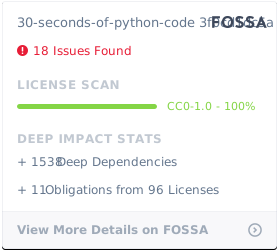](https://app.fossa.io/projects/git%2Bgithub.com%2Fkriadmin%2F30-seconds-of-python-code?ref=badge_large)
|